How to Stop Feeling Guilty About Not Reading Your Bible
Drowning in Bible study guilt? You're not a bad Christian ... you just need a different approach. Here's how to break the shame spiral for good.
Written by Kristen
Coffee-loving mom of 2 · Bible study enthusiast · Founder of Bible Momma
The Guilt Is Real … And It’s Not Helping
Can I be honest with you for a second? I spent years feeling guilty about my Bible. Not about anything in it … about the fact that it was sitting on my nightstand collecting dust while I scrolled Instagram for forty-five minutes before bed.
Every Sunday at church, someone would mention their “quiet time” and I’d smile and nod while internally calculating how many weeks it had been since I’d actually opened my Bible. Four? Six? I’d stopped counting because counting made it worse.
The guilt was constant. It sat in the back of my brain like a low-grade headache. Not sharp enough to make me actually do something about it, but persistent enough to make me feel like a terrible Christian approximately all the time.
If you’re reading this, I’m guessing you know exactly what I’m talking about.
The Shame Spiral Nobody Talks About
Here’s how the shame spiral works, and it’s brutally predictable:
You miss a day of Bible study. You feel a little guilty. You tell yourself you’ll do it tomorrow. Tomorrow comes and goes. Now you feel more guilty. The guilt makes you avoid your Bible because looking at it reminds you of your failure. More days pass. The guilt compounds. Eventually you feel so far behind and so ashamed that starting again feels impossible.
So you don’t start. And the guilt keeps growing.
I lived in this spiral for longer than I’d like to admit. And the worst part? The guilt never once motivated me to actually study. Not once. It just made me feel bad. That’s all guilt does when it’s left unchecked … it paralyzes you.
Why Guilt Doesn’t Work as Motivation
Let’s just call this out: guilt is a terrible motivator for anything, but especially for something that’s supposed to bring you closer to God.
Think about it. When you feel guilty about not reading your Bible, what does that do to your image of God? It turns Him into a disappointed parent with crossed arms, tapping His foot, waiting for you to get your act together. That’s not the God I read about when I actually do open my Bible.
The God I read about in Scripture is the one who left the ninety-nine sheep to find the one who wandered off. He’s the father running toward the prodigal son, not standing at the door with a lecture prepared.
Guilt says “you should be doing more.” Grace says “come as you are.”
I don’t know about you, but I respond a lot better to the second one.
Where Does the Guilt Actually Come From?
This is worth unpacking because I think a lot of us carry guilt that we picked up from other people … not from God.
Comparison. You see another woman at church who seems to have it all together spiritually, and you assume you should be where she is. You don’t see her struggles. You just see her highlight reel.
Unrealistic expectations. Somewhere along the way, you absorbed the idea that a “real” Christian reads their Bible every single day for at least thirty minutes. Who made that rule? Because it’s not in the Bible.
All-or-nothing thinking. You believe that if you can’t do Bible study “right” … with a full hour, a journal, colored pens, and a latte … it doesn’t count. So you do nothing instead.
Church culture. Some churches (unintentionally or not) create environments where Bible reading is treated as a performance metric. How many chapters did you read this week? Are you in a study group? Have you finished your devotional? It can start to feel like a spiritual report card.
None of these things are from God. They’re from culture, comparison, and our own perfectionism.
How to Break Free From Bible Study Guilt
Okay, enough diagnosing the problem. Here’s what actually helped me stop the spiral and start studying without the weight of shame on my shoulders.
1. Forgive Yourself for the Gap
Whatever time has passed … a week, a month, a year, a decade … it’s done. You can’t go back and read all those chapters. And God isn’t keeping a tally of your missed days.
Say it out loud if you need to: “I forgive myself for not reading my Bible. I’m starting fresh today.” It sounds cheesy. Do it anyway.
2. Throw Out the Rulebook
There is no right way to study the Bible. There’s no minimum time requirement. There’s no required number of chapters per day. There’s no specific hour of the morning that makes it more spiritual.
Reading one verse and thinking about it on your drive to work? That’s Bible study. Listening to an audio Bible while folding laundry? That counts too. Reading a Psalm in the school pickup line? Absolutely valid.
Stop letting fake rules keep you from something real.
3. Start Embarrassingly Small
My therapist once told me that the antidote to perfectionism is imperfect action. She was talking about my laundry pile at the time, but it applies here too.
Start with two minutes. Open your Bible, read something … literally anything … and close it. Done. You did it. Tomorrow, do it again. That’s it.
I started with reading one Proverb a day because Proverbs has 31 chapters and there are (roughly) 31 days in a month. One chapter takes about three minutes. It felt too easy, which is exactly why it worked.
4. Pick a Guide That Builds In Grace
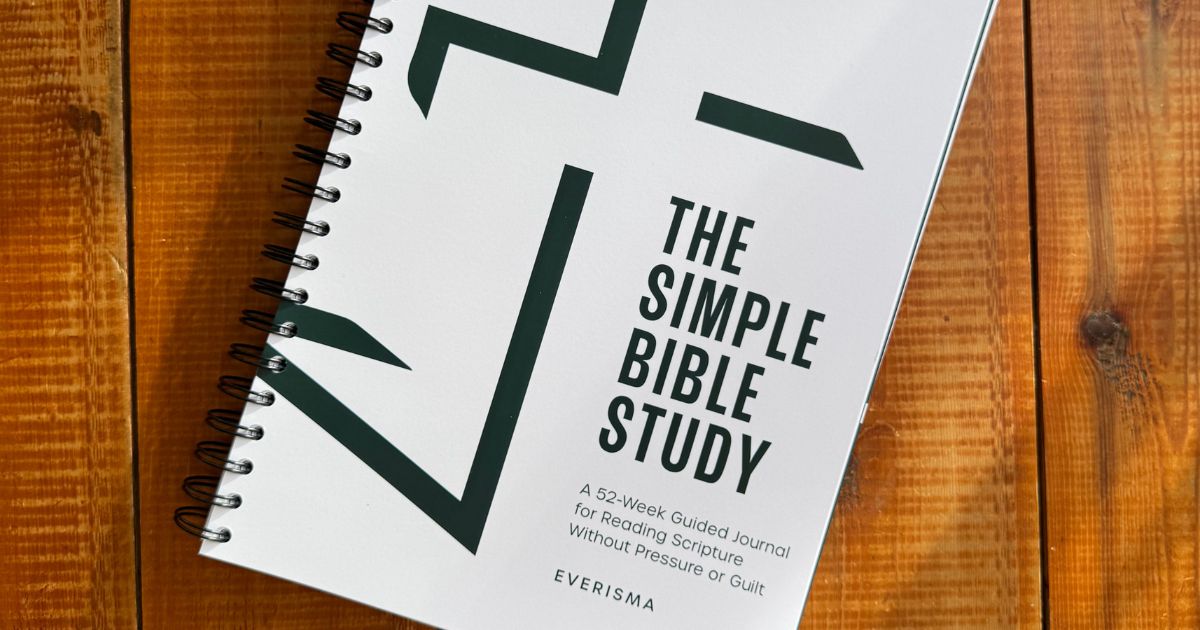
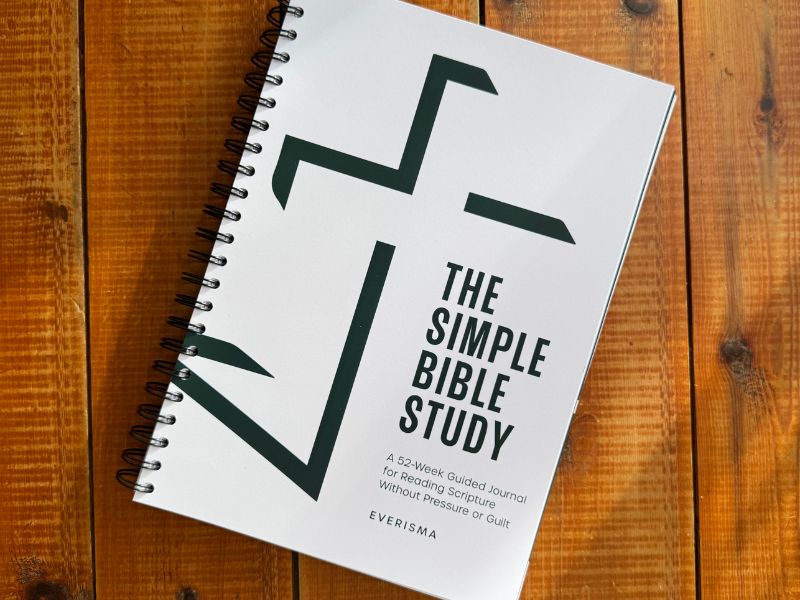
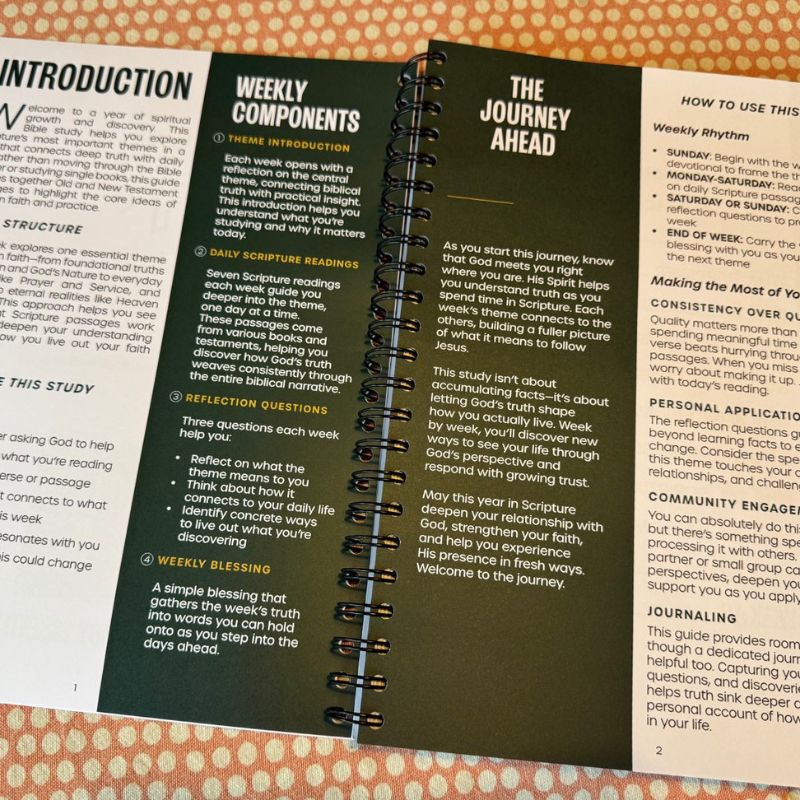
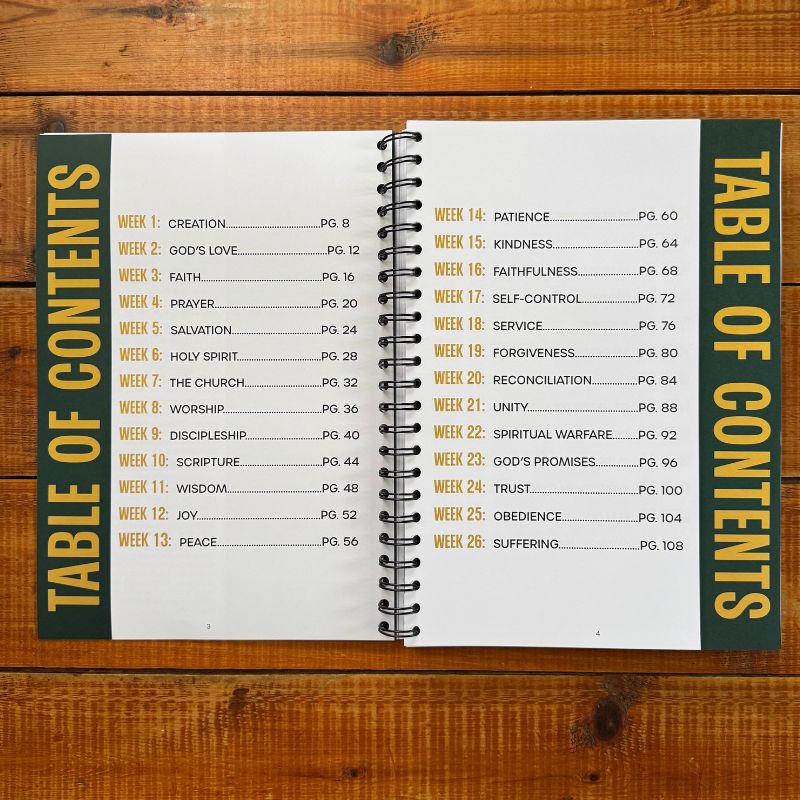
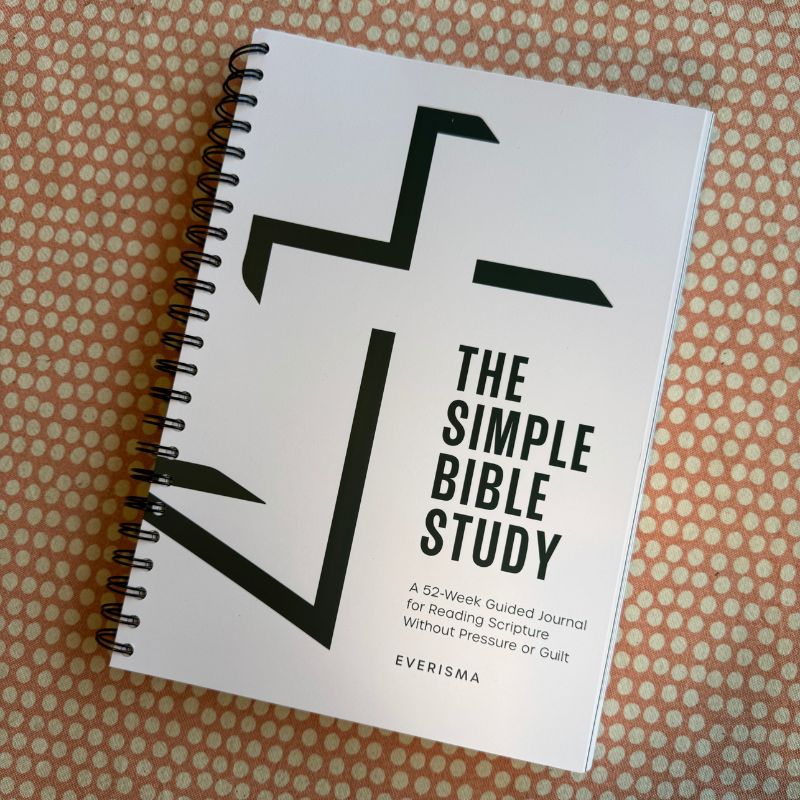
This is what changed everything for me. I found a guide that doesn’t have dates printed on each lesson. There’s no “Day 1, Day 2, Day 3” system where missing a day puts you behind. You just pick up where you left off.
No catching up. No falling behind. No guilt about the gap.
That one design choice … no dates … removed about 80% of my guilt overnight. Because suddenly there was no “behind” to be.
5. Remember Why You’re Doing This
You’re not reading the Bible to check a box or earn God’s approval. You already have His approval. You’re reading it because you want to know Him better. Because something in you is hungry for peace, for wisdom, for connection to something bigger than your to-do list.
When I shifted my mindset from “I have to read my Bible” to “I get to read my Bible,” the guilt lost its grip. It wasn’t instant … old mental habits die hard … but it shifted gradually.
What a Guilt-Free Bible Study Actually Looks Like
Let me paint you a picture of what my Bible study looks like now, because it’s nothing like what I thought it was “supposed” to look like.
Some mornings I study for fifteen minutes with my coffee before the kids are up. Some days I read two verses on my phone while waiting at the pediatrician’s office. Some weeks I study five days. Some weeks it’s two. One time I did my Bible study while sitting on the bathroom floor because my toddler was in the tub and it was the only time I had.
None of it is Instagram-worthy. All of it counts.
The Permission Slip You Didn’t Know You Needed
If you need someone to tell you this, here it is: you have permission to study the Bible imperfectly. You have permission to miss days. You have permission to not understand everything you read. You have permission to start over as many times as you need to.
God is not disappointed in you. He’s not keeping score. He’s just glad you’re here.
Now put down the guilt, pick up your Bible (or your phone, or your study guide), and read one verse. Just one. No pressure, no performance, no shame.
You’ve got this. And more importantly, He’s got you.
Frequently Asked Questions
Is it a sin to not read the Bible every day?
No. Nowhere in the Bible does it say you must read Scripture daily to be in good standing with God. Daily Bible reading is a wonderful habit and it will grow your faith, but missing a day doesn't make you a bad Christian. God's love for you isn't based on your reading streak.
How do I stop comparing my Bible study to other people's?
Remind yourself that you're seeing their highlight reel, not their reality. That woman who posts her beautiful journaling Bible spreads? She probably has hard weeks too. Focus on your own journey. Unfollow accounts that make you feel guilty instead of inspired. And remember ... God isn't grading on a curve.
What if I've gone months (or years) without reading my Bible?
Then today is a great day to read one verse. Seriously, that's it. Don't try to make up for lost time. Don't start a ninety-day reading plan to "catch up." Just open it, read something, and let that be enough. The gap doesn't define you. What you do next does.
How do I know if my guilt about Bible study is healthy conviction or unhealthy shame?
Healthy conviction says "I miss spending time with God, and I want to get back to it." It moves you toward action with hope. Unhealthy shame says "I'm a failure and God is disappointed in me." It paralyzes you and makes you want to hide. If your guilt is making you avoid your Bible instead of open it, that's shame ... and it's not from God.
Ready to Find a Bible Study That Actually Works?
This is the guide that finally helped me stay consistent, and I think it can help you too.
See the Bible Study Guide I Use →Hi, I'm Kristen!
I'm a coffee-loving mom of two from who finally found a Bible study system that actually sticks. After trying (and abandoning) more study guides than I can count, I built Bible Momma to help other moms stop feeling guilty and start growing closer to God... messy schedules, short attention spans, and all.
Read my full story →