How to Study the Bible Consistently (Without White-Knuckling It)
Struggling to stay consistent with Bible study? Here's how to build a real habit that sticks ... no willpower required, no guilt trips included.
Written by Kristen
Coffee-loving mom of 2 · Bible study enthusiast · Founder of Bible Momma
Why Can’t I Study the Bible Consistently?
Let me just say it: if you’ve ever started a Bible study plan on a Monday, felt amazing about it, and then completely forgotten it existed by Thursday … you’re not broken. You’re normal.
I used to think consistency was about willpower. Like if I just wanted it badly enough, I’d magically become the kind of person who wakes up at 5 AM with a smile, opens her Bible, and journals for an hour before the kids wake up. Spoiler alert: I am not that person. I am the person who hits snooze three times and then gets woken up by a four-year-old standing two inches from my face asking if we have fruit snacks.
So when people told me to “just be more disciplined,” I wanted to throw my cold coffee at them. (I drink a lot of cold coffee. Not by choice … I just forget it exists until it’s room temperature.)
The truth is, consistency isn’t about discipline. It’s about design. You don’t need more willpower. You need a better system.
The Real Reason You Keep Falling Off
Here’s what nobody talks about: most Bible study plans are designed to fail.
They ask for too much time. They start too ambitiously. They assume you have a quiet house, a clear schedule, and zero children who need things from you every four minutes.
When you inevitably miss a day, you feel guilty. Then you miss another day because the guilt makes you avoid it. Then a week goes by and you think “well, I already ruined it, might as well start over next month.” And the cycle repeats.
Sound familiar? Yeah. I lived in that cycle for years.
The problem was never my heart. It was my strategy.
How to Actually Study the Bible Consistently
Here’s what finally worked for me … and none of it involves waking up earlier or having more self-control.
1. Make It Stupidly Small
I’m talking five minutes. Maybe even three. If five minutes sounds too easy, good. That’s the point.
The biggest mistake I made was trying to do 30-minute study sessions right out of the gate. That’s like signing up for a marathon when you haven’t jogged since high school gym class. Start so small it feels almost silly.
Read one verse. Think about it for a minute. Done. You studied your Bible today. That counts. Stop rolling your eyes … I’m serious.
2. Attach It to Something You Already Do
This is the game-changer, and it’s called habit stacking. You take something you already do every single day and attach Bible study to it.
For me, it’s coffee. I make coffee every morning without fail. (My family knows not to speak to me before the first cup.) So I started keeping my Bible right next to the coffee maker. While the coffee brews, I read. That’s it. The coffee is my trigger.
Maybe for you it’s during your lunch break. Or right after you buckle the kids into bed. Or while you’re waiting in the school pickup line. Find the thing you already do and piggyback on it.
3. Remove Every Possible Obstacle
If you have to go find your Bible, find a pen, find your study guide, find your reading glasses, and clear off a spot at the table … you’ve already created five chances to get distracted and never start.
I keep everything in one spot. Bible, guide, pen, reading glasses … all in a little basket on my counter. When coffee starts brewing, I grab the basket. Zero thinking required.
4. Track It (But Don’t Punish Yourself)
I use a simple paper calendar on my fridge. Every day I study, I put an X. That’s it. No apps, no complicated systems. Just Xs on a calendar.
The goal isn’t perfection. It’s seeing a pattern. When I see four Xs in a row, I don’t want to break the streak. But when I miss a day, I don’t spiral. I just pick it up tomorrow.
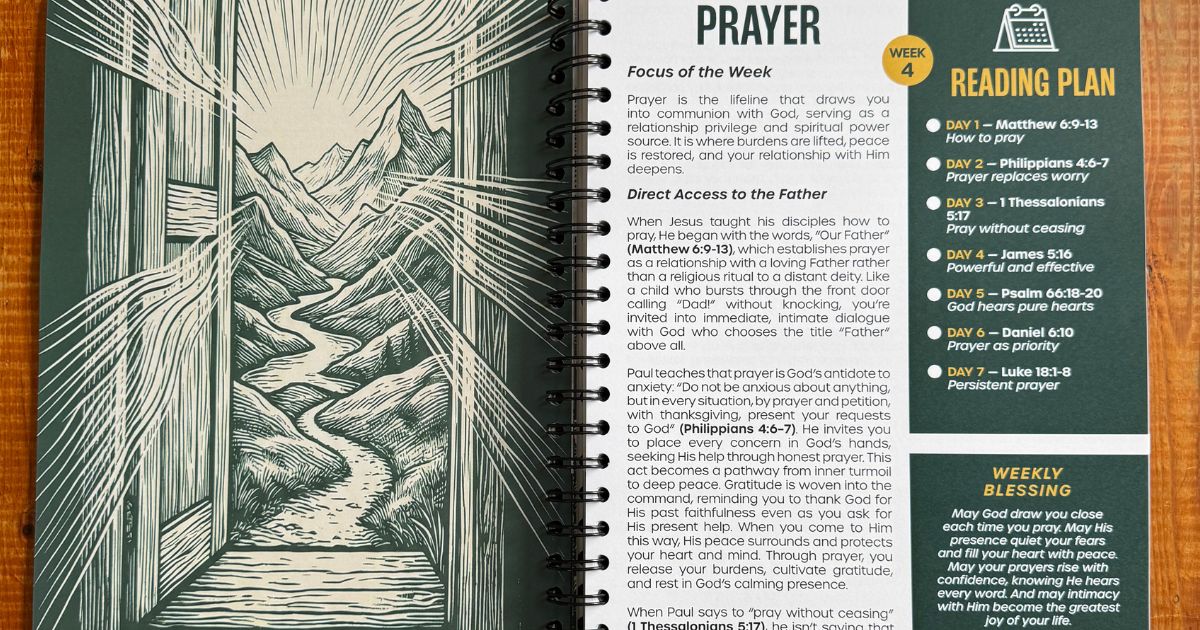
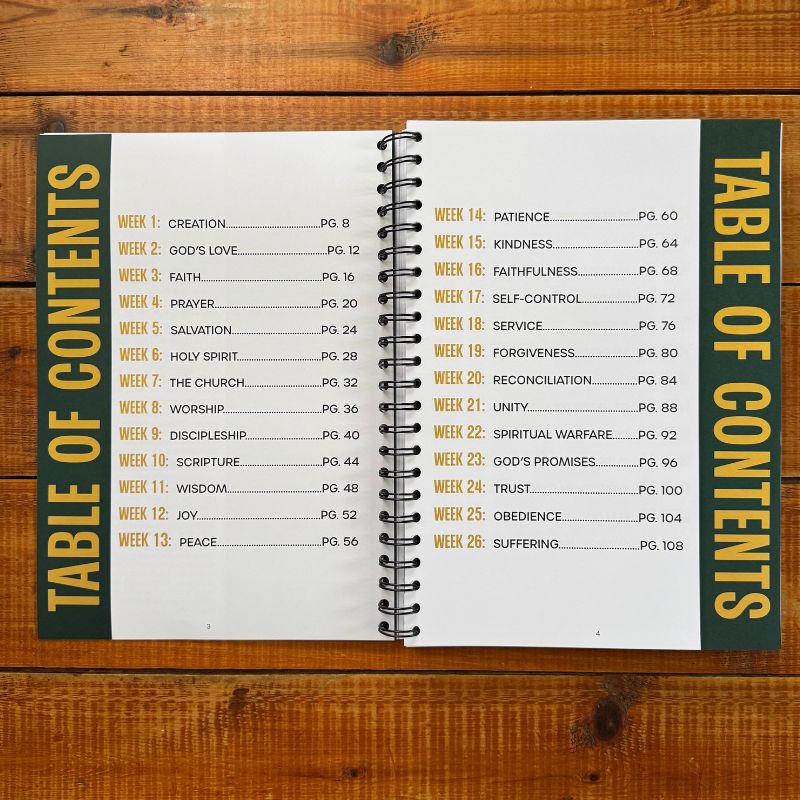
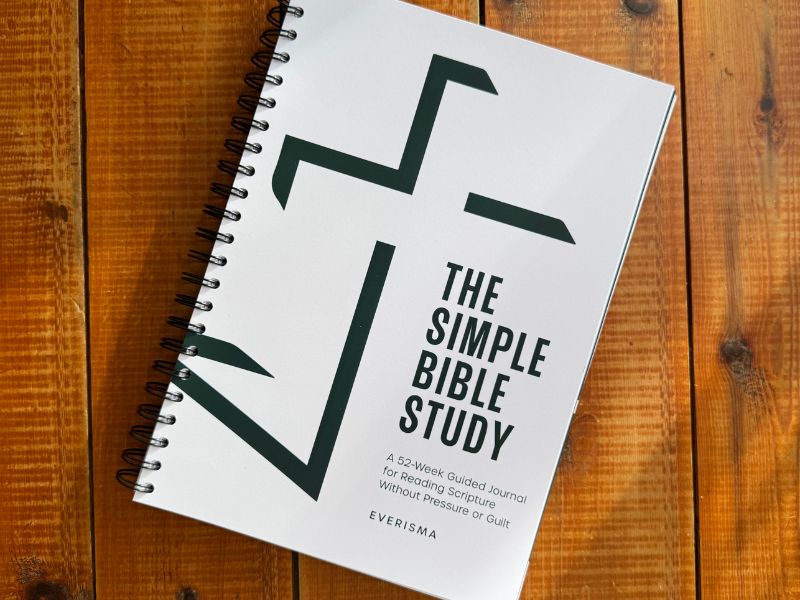
5. Use a Guide That Doesn’t Demand Perfection
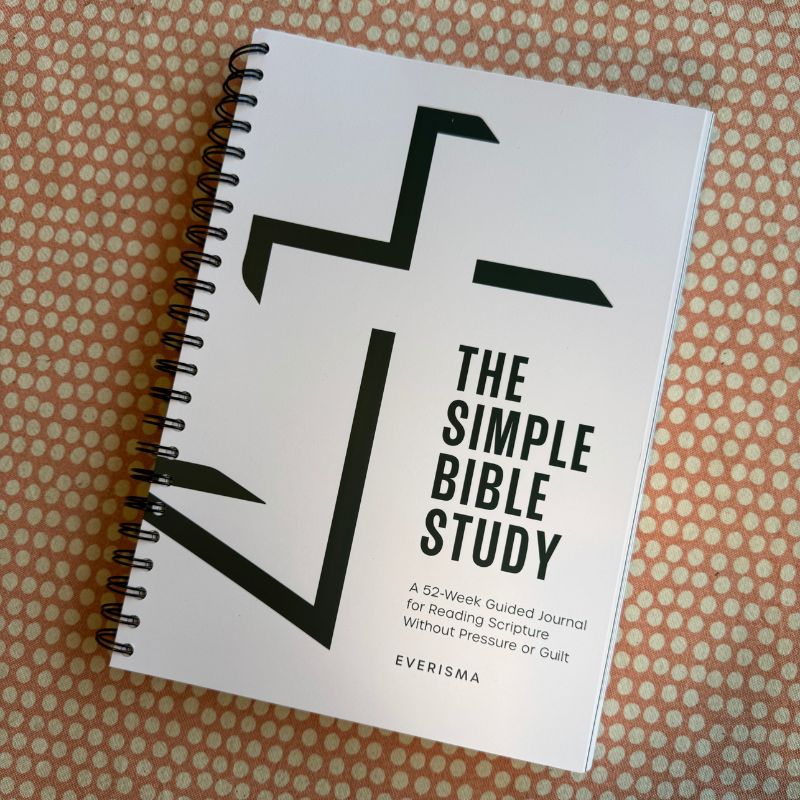
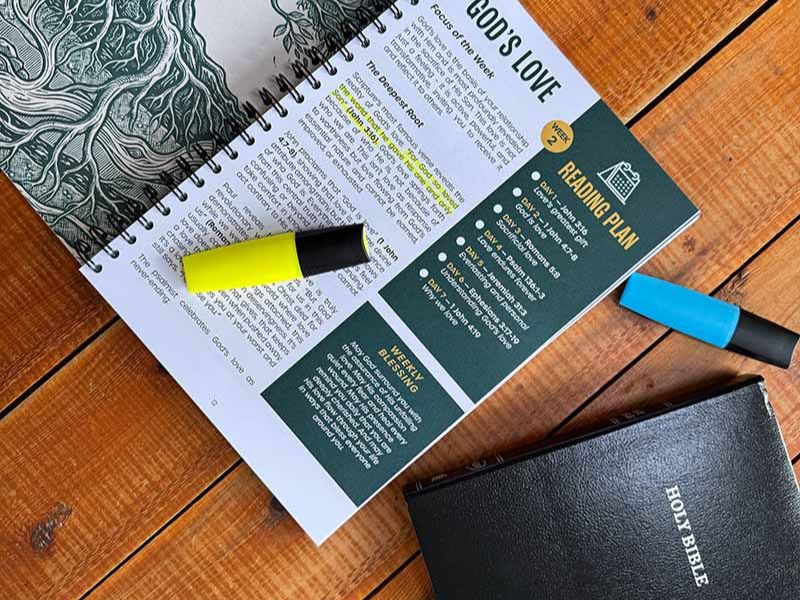
This is the part where I’ll get personal. The thing that finally made consistency stick for me wasn’t a new planner or a motivational Instagram post. It was finding a guide that was designed for my actual life.
It takes 15 minutes. It tells me exactly what to read. It doesn’t guilt me when I miss a day … I just pick up where I left off. No catching up, no falling behind. Just showing up when I can.
If your current study plan makes you feel like a failure every time you miss a day, the plan is the problem. Not you.
6. Give Yourself Grace on the Bad Days
Some days, Bible study is going to be three minutes of reading one Psalm while hiding in the bathroom because it’s the only room with a lock. And that’s okay.
Some days it’s going to be twenty minutes of deep, quiet study while the kids are at school and you’ve got your favorite mug and a candle lit. Also great.
Both of those count. Both of those are you showing up.
What Consistency Actually Looks Like
I want to redefine something here, because I think we have a warped view of what “consistent” means.
Consistent doesn’t mean daily. Consistent means you keep coming back.
Some weeks I study five days out of seven. Some weeks it’s three. One particularly rough week when both kids had the stomach flu, it was zero. But I came back the next week. That’s consistency.
If you’re waiting until you can do it perfectly every single day, you’ll never start. Done is better than perfect, and showing up imperfectly is a thousand times better than not showing up at all.
The Compound Effect of Small Habits
Here’s what blew my mind: after three months of these tiny, imperfect study sessions, I realized I’d read more of the Bible than I had in the previous three years of trying to do it “right.”
Small and consistent beats big and sporadic every single time.
I wasn’t doing anything impressive. Five minutes here, ten minutes there, occasionally a luxurious fifteen-minute session when nap time actually worked out. But it added up. And somewhere along the way, it stopped being something I had to force myself to do and became something I actually looked forward to.
That shift doesn’t come from willpower. It comes from repetition.
The Bottom Line
Stop trying to white-knuckle your way into consistency. Build a system instead.
Make it small. Attach it to a habit. Remove the obstacles. Track it loosely. Use a guide that works with your life, not against it. And give yourself grace.
You don’t need to become a different person to study the Bible consistently. You just need a better plan.
Now if you’ll excuse me, my coffee’s getting cold. Again.
Frequently Asked Questions
How many days a week do I need to study the Bible to be "consistent"?
There's no magic number. If you're currently at zero, then one day a week is consistent. Seriously. Start where you are and build from there. Three to five days a week is a great goal to work toward, but don't let the "ideal" number keep you from starting with what's realistic right now.
What's the best time of day for Bible study?
Whatever time you'll actually do it. For me, it's early morning with coffee because that's the only time my house is quiet. But I know moms who study during nap time, after bedtime, or even during their lunch break at work. The best time is the time that fits your life.
What if I keep starting and stopping?
Welcome to the club ... most of us have been there. The key is to stop treating each restart as a failure and start treating it as practice. Every time you come back, you're building the muscle. Also, consider whether your plan is too ambitious. If you keep burning out, scale way back. Five minutes is better than zero minutes.
Do I need a Bible study guide to be consistent?
You don't *need* one, but it helps a lot. A good guide removes the decision fatigue of figuring out what to read and how to study it. That's one less obstacle between you and actually opening your Bible. It's like having a workout plan versus just wandering around the gym ... structure makes consistency way easier.
Ready to Find a Bible Study That Actually Works?
This is the guide that finally helped me stay consistent, and I think it can help you too.
See the Bible Study Guide I Use →Hi, I'm Kristen!
I'm a coffee-loving mom of two from who finally found a Bible study system that actually sticks. After trying (and abandoning) more study guides than I can count, I built Bible Momma to help other moms stop feeling guilty and start growing closer to God... messy schedules, short attention spans, and all.
Read my full story →