What to Look for in a Bible Study Guide (Before You Waste Your Money)
Not all Bible study guides are created equal. Here's a practical checklist of what to look for ... and what to avoid ... from a mom who's bought way too many.
Written by Kristen
Coffee-loving mom of 2 · Bible study enthusiast · Founder of Bible Momma
The Problem with Buying a Bible Study Guide
Here’s something nobody warns you about: buying a Bible study guide is weirdly stressful. You’d think it would be simple … pick one, use it, grow spiritually. But then you walk into a bookstore (or open Amazon) and there are literally hundreds of options. Studies for women, for moms, for couples, for beginners, for “deep divers,” for every book of the Bible, for every season of life.
And they all look great on the cover.
I’ve bought at least a dozen Bible study guides over the years. Some were fantastic. Some collected dust after week two. A few made me feel worse about my faith instead of better. And one … I’m not joking … had so many fill-in-the-blank questions that it felt like a standardized test.
So before you spend your money (and more importantly, your limited time), here’s what I wish someone had told me to look for.
The Non-Negotiables: What Every Good Guide Needs
1. Clear Structure
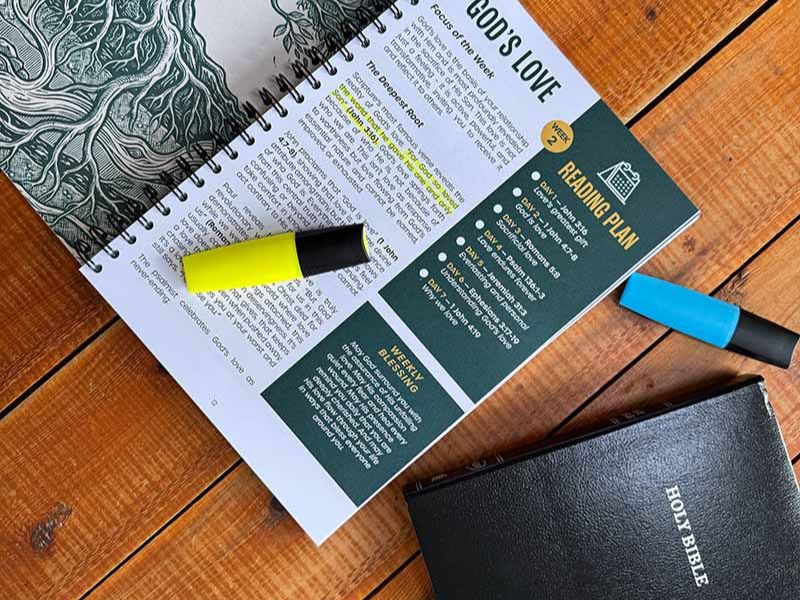
A good Bible study guide tells you exactly what to do. Not vaguely. Not “read and reflect.” It gives you a clear, repeatable framework for each session.
That might look like:
- A specific passage to read
- Questions that guide your thinking
- Space to write or journal
- A suggested timeframe
If you open a study guide and feel confused about what you’re supposed to do first … that’s a red flag. You shouldn’t need a tutorial to use a study tool.
2. Realistic Time Expectations
If a study says “daily reading” but each session takes 45 minutes, that’s not a daily study for most people. That’s a weekend project.
Look for guides that are honest about time. The best ones are designed for 15-20 minute sessions, because that’s what most people (especially parents) can realistically manage. Some will explicitly say “this session takes about 15 minutes,” which I always appreciate.
A guide that requires an hour a day isn’t bad … it’s just not designed for you if you’re fitting study into the cracks of a busy life. Know what you’re getting into before you buy.
3. Works with Any Bible Translation
This one seems obvious, but you’d be surprised. Some study guides are built around a specific translation and reference specific wording that only appears in that version. If you don’t have that translation, you’re lost.
A good guide works with whatever Bible you own … NIV, ESV, NLT, NKJV, whatever. It points you to passages and ideas, not specific word choices.
4. Teaches You How to Study (Not Just What to Think)
This is the big one. There’s a difference between a guide that tells you what a passage means and a guide that teaches you how to figure out what a passage means.
The first one is a devotional. The second one is a study guide.
A great study guide gives you tools: how to observe a text, how to interpret it, how to apply it. It builds skills you’ll use for the rest of your life, not just for the length of that study. You want to learn to fish, not just eat the fish someone hands you.
5. Grace for Missing Days
Life happens. Kids get sick. You get sick. Work gets intense. Vacations throw off your routine. A good study guide acknowledges this instead of making you feel like a failure.
Look for guides that:
- Don’t number days consecutively (so skipping day 14 doesn’t make day 15 feel wrong)
- Build in review or catch-up periods
- Explicitly say something like “go at your own pace”
- Don’t have a rigid schedule that crumbles if you miss a week
If a guide makes you feel guilty for being human, it’s not the guide for you.
The Nice-to-Haves
Historical and Cultural Context
The Bible was written thousands of years ago in cultures very different from ours. A guide that explains the historical context … who wrote this, who they were writing to, what was happening at the time … makes the text come alive in a way that just reading it cold doesn’t.
You don’t need a history textbook, but a paragraph or two of context before each study section goes a long way.
Good Questions (Not Just Fill-in-the-Blank)
The quality of the questions matters more than the quantity. Good study guide questions make you think. They don’t have one “right” answer. They push you to connect Scripture to your actual life.
Bad questions: “What did Jesus say in verse 4?” (That’s not a question, that’s a quiz.)
Good questions: “Why do you think Jesus responded this way instead of how the disciples expected?” or “Where in your life right now do you need this kind of patience?”
Group and Solo Flexibility
Some guides are designed for group studies with discussion questions. Some are purely for individual use. The best ones work for both … you can use them on your own during the week and bring them to a group setting if you want to.
A Logical Progression
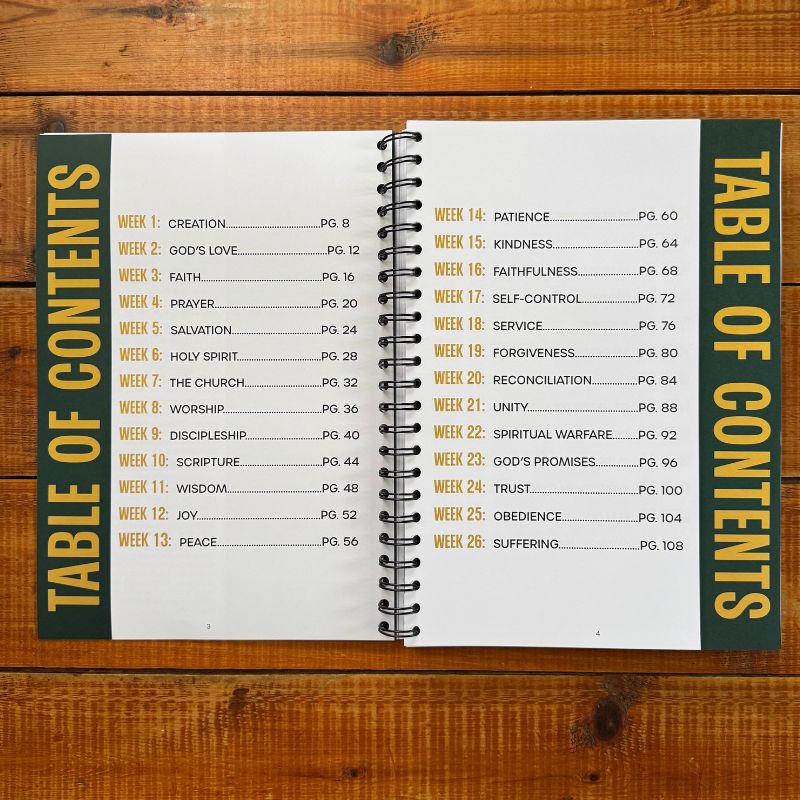
A good guide takes you on a journey. It starts somewhere accessible and builds toward deeper understanding. Random topic-hopping every week might keep things interesting, but it doesn’t build a foundation. Look for guides that have a clear arc or progression.
Red Flags: What to Avoid
Too much author, not enough Bible. If a study guide spends more pages on the author’s stories and opinions than on actual Scripture engagement, it’s a devotional with study questions taped on. Not inherently bad, but not the same thing.
Guilt-based motivation. Any guide that implies you’re a bad Christian for not studying enough, or uses shame to motivate consistency, is a hard pass. Guilt is not a sustainable motivator. Grace is.
Assumes advanced knowledge. If the first week references chiastic structures, asks you to compare pericopes, or assumes you know the difference between Pauline and Deutero-Pauline epistles … it’s not for beginners, no matter what the cover says.
No application component. Knowledge without application is trivia night at church. A study that helps you observe and interpret but never asks “so what does this mean for your life?” is incomplete.
Trendy over timeless. Be cautious with guides that seem more interested in being on-brand or Instagrammable than being biblically solid. Pretty design is fine … I love good design … but it shouldn’t be the main selling point.
What I Actually Use (and Why)
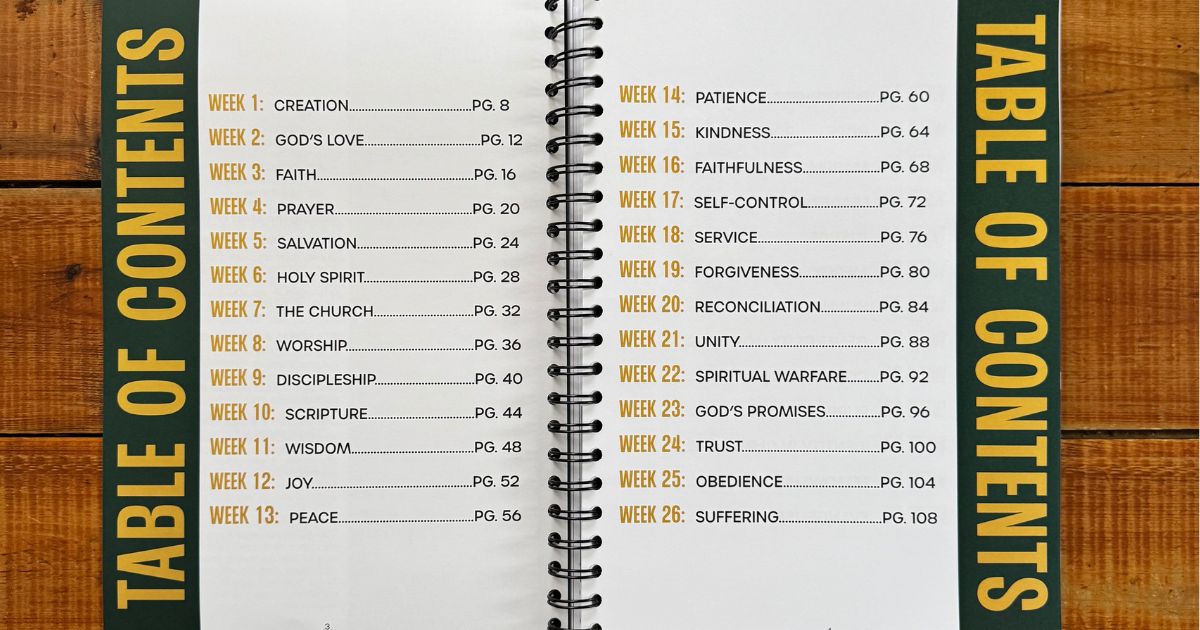
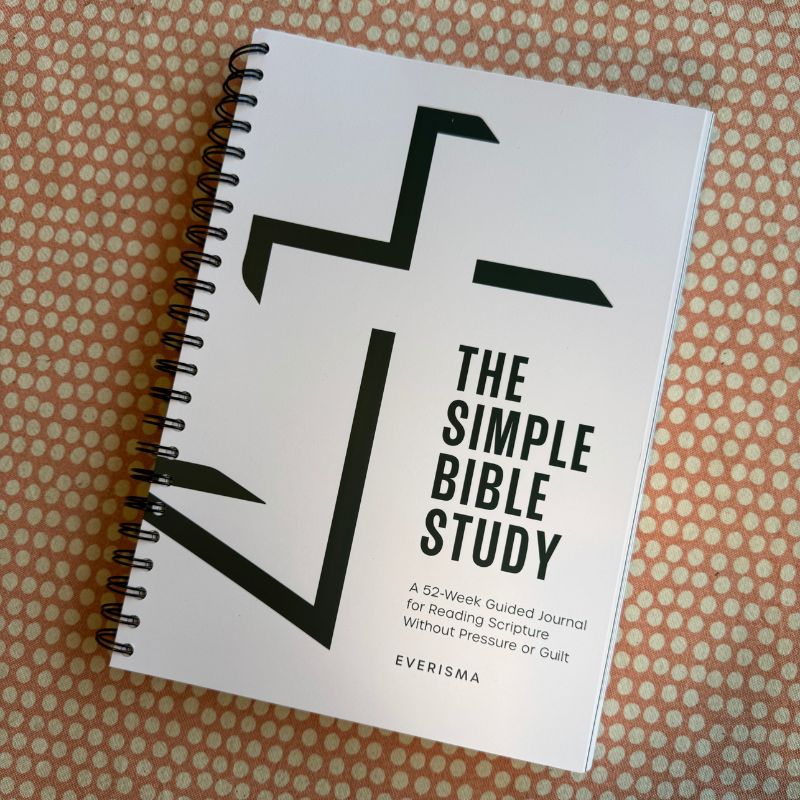
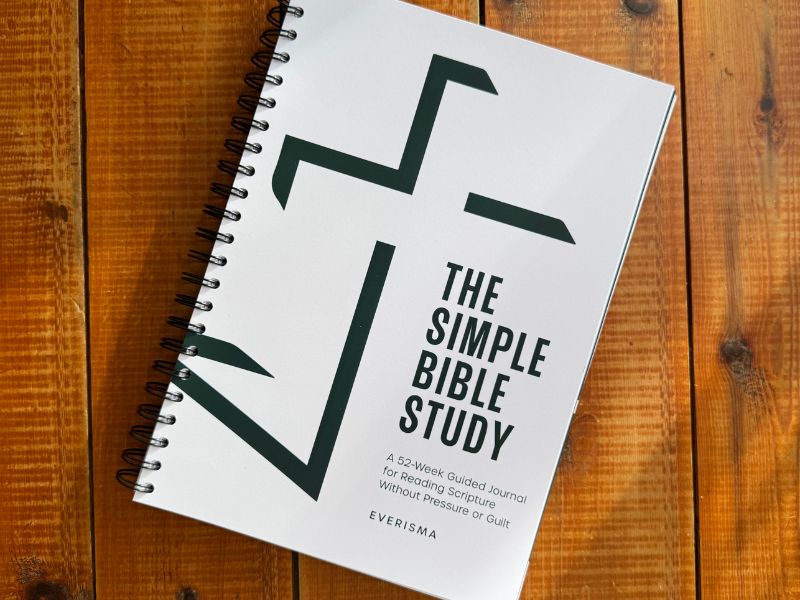
After all this trial and error … after the guide that felt like homework, the one that was all fluff, and the one that assumed I had a seminary education … I found the Everisma guide.
Here’s why it checks my boxes:
- Clear structure: Every session follows the same framework. Open it, know what to do.
- 15-minute sessions: Designed for real life, not fantasy life.
- Works with any translation: I use the NLT and it works perfectly.
- Teaches the method: I’m learning how to study, not just following along.
- Zero guilt: Missed a week? Just pick up where you left off. No judgment.
- Built for the full year: It’s a 52-week plan that paces well without burning you out.
Is it the only good guide out there? No. But it’s the one that finally worked for me, and after a dozen failures, that means something.
How to Test a Guide Before Committing
If you’re on the fence about a guide, here’s my quick test:
- Look at one session. Is it clear what you’re supposed to do?
- Time yourself. Does it take the amount of time they claim?
- Check the questions. Do they make you think, or are they just fill-in-the-blank?
- Read the intro. Does the author explain the method, or just assume you know?
- Look at week 20. Is it still engaging, or has it gotten repetitive?
If you can preview even one session before buying, do it. Your time is worth more than the $15-30 most guides cost.
Frequently Asked Questions
How much should a good Bible study guide cost?
Most quality study guides range from $15-40, depending on length and format. Price alone doesn't determine quality ... I've had expensive guides that were terrible and affordable ones that changed my life. Look at the content and structure, not the price tag.
Should I pick a guide based on a specific book of the Bible or a topic?
For beginners, I'd recommend a guide that takes you through multiple books rather than one deep-dive into a single book. This gives you a broader foundation. Once you've been studying for a while, deep-dives into specific books like Romans or James are incredibly rewarding.
Do I need a separate study Bible, or is a regular Bible enough?
A regular Bible is plenty. Study Bibles add helpful notes and context, but they can also be overwhelming for beginners (and heavy ... my study Bible could double as a doorstop). Start with whatever Bible you have and add tools as you need them.
What's the difference between a Bible study guide, a workbook, and a curriculum?
A guide provides structure and direction for your personal study. A workbook is more fill-in-the-blank with specific exercises. A curriculum is typically designed for group settings with leader guides and participant materials. For personal daily study, a guide is usually the best fit.
Ready to Find a Bible Study That Actually Works?
This is the guide that finally helped me stay consistent, and I think it can help you too.
See the Bible Study Guide I Use →Hi, I'm Kristen!
I'm a coffee-loving mom of two from who finally found a Bible study system that actually sticks. After trying (and abandoning) more study guides than I can count, I built Bible Momma to help other moms stop feeling guilty and start growing closer to God... messy schedules, short attention spans, and all.
Read my full story →