The SOAP Bible Study Method: The Simplest Way to Actually Understand What You're Reading
The SOAP Bible study method breaks down Scripture into four easy steps. Here's how it works, with real examples from a mom who uses it during nap time.
Written by Kristen
Coffee-loving mom of 2 · Bible study enthusiast · Founder of Bible Momma
What Is the SOAP Bible Study Method?
SOAP is an acronym, and for once, it’s one that actually makes sense:
- S - Scripture
- O - Observation
- A - Application
- P - Prayer
That’s the whole method. You read a piece of Scripture, observe what’s happening, apply it to your life, and pray about it. Four steps. Fifteen minutes. Done.
I discovered SOAP after failing spectacularly at three other study methods that all required more time, more supplies, and more biblical knowledge than I had. SOAP was the first method that made me think, “Oh wait, I can actually do this.”
And I’ve been doing it almost daily for over a year now … usually during nap time, always with coffee, and sometimes with a toddler climbing on me. It still works.
Why SOAP Works So Well for Beginners
Here’s why SOAP clicked for me when nothing else did:
It removes the blank page problem. You know that feeling when you open your Bible and have no idea what to do next? SOAP gives you four clear prompts. You’re never just staring at the page wondering if you’re doing it right.
It’s short. I can SOAP a passage in 10-15 minutes. I know some people have hour-long quiet times, and good for them, genuinely. But I have two kids, a house that perpetually looks like a toy store exploded, and a coffee addiction that requires frequent refills. Fifteen minutes is my reality.
It works with any passage. Long or short, Old Testament or New, poetry or narrative … SOAP applies to everything. You don’t need to learn different techniques for different types of writing.
It builds a journal you can look back on. This was an unexpected bonus. My SOAP journal is basically a record of what God has been teaching me over the past year. Flipping back through it is like reading my own spiritual diary, and it’s honestly one of my favorite things.
How to Do the SOAP Method (Step by Step)
Let me walk you through each step using a real passage. We’ll use Proverbs 3:5-6 because it’s familiar, short, and packed with meaning:
“Trust in the Lord with all your heart and lean not on your own understanding; in all your ways submit to him, and he will make your paths straight.”
S: Scripture
Write out the passage by hand. I know, I know … why can’t you just read it? You can. But something happens when you physically write Scripture. You slow down. You notice words you’d normally skim past. Your brain processes it differently.
I literally copy the verse into my journal. Word for word. It takes two minutes and it makes every other step better.
If writing the whole thing feels like too much, write the verse that stands out to you the most. But try the full passage at least a few times … you might be surprised what you catch.
O: Observation
Now you look at what you wrote and ask: What do I notice?
This isn’t interpretation yet. You’re not asking what it means. You’re asking what it says. Here’s what I might observe about Proverbs 3:5-6:
- The command is to trust with “all your heart”, not just part of it
- “Lean not” is an active instruction … you have to deliberately stop leaning on your own thinking
- “In all your ways”, not just the big decisions, all of them
- “Submit”, that’s a strong word, implies surrender
- “He will make your paths straight”, this is a promise, and it’s conditional on the previous actions
- There’s a contrast: trusting God vs. leaning on your own understanding
See what just happened? A verse you might have glossed over suddenly has layers. You’re noticing things. This is the part that makes Bible study feel alive.
A: Application
Here’s where it gets personal. Application asks: What does this mean for my life right now?
Not in theory. Not in a theological sense. Right now, in your actual daily life.
For me, with Proverbs 3:5-6, my application might be:
“I’ve been stressing about whether to put my oldest in a different school next year. I keep running scenarios in my head and googling reviews and asking everyone’s opinion. This verse is telling me to stop leaning on my own analysis and actually bring it to God. Not just a quick ‘help me, Lord’ prayer, but real surrender. Trusting that He will make the path clear if I submit the decision to Him.”
That’s it. Specific. Honest. Connected to real life. Not a generic “I should trust God more.” That’s too vague to act on. The more specific your application, the more useful it is.
P: Prayer
Write out a prayer based on what you just studied. It doesn’t have to be long or eloquent. Pray about what you observed and how you want to apply it.
Mine might look like:
“Lord, I’m stressed about the school decision and I keep trying to figure it out on my own. Help me trust You with ALL my heart … not just the part that’s convenient. I’m choosing to submit this decision to You. I believe You’ll make the path clear. Help me stop white-knuckling this and actually let go. Amen.”
Writing the prayer makes it more intentional than just thinking it. And when you look back at your journal months later and see how God answered? That’s powerful.
Another Example: SOAP with Psalm 46:10
Let me do one more so you can see how this works with a different type of passage.
S: Scripture: “Be still, and know that I am God; I will be exalted among the nations, I will be exalted in the earth.”
O: Observation:
- “Be still”, a command to stop striving, stop fighting, stop trying to control
- “Know”, not just believe, but deeply know
- “That I am God”, a declaration of His sovereignty
- “I will” appears twice, God is making promises about what HE will do
- The scope is massive: “among the nations,” “in the earth”, this isn’t just about my little life
A: Application: “I need to hear this today. I’ve been running around trying to manage everything … the house, the kids’ schedules, our budget … and I haven’t been still in weeks. This verse isn’t telling me to be lazy. It’s telling me to stop acting like everything depends on me. God is God. I am not. I need to sit with that.”
P: Prayer: “God, I’m tired and I’m trying to do everything. Help me be still. Not just physically but in my heart. Remind me that You are God and You’ve got this … all of it. The stuff I’m carrying isn’t mine to carry alone. Amen.”
See how simple that is? And how personal? That’s SOAP. No fancy equipment. No theology degree. Just you, your Bible, and 15 minutes.
Tips for Making SOAP a Habit
Pick a consistent time. Mine is during afternoon nap (when it actually happens) or right after bedtime when I finally collapse on the couch. Morning people, I envy you.
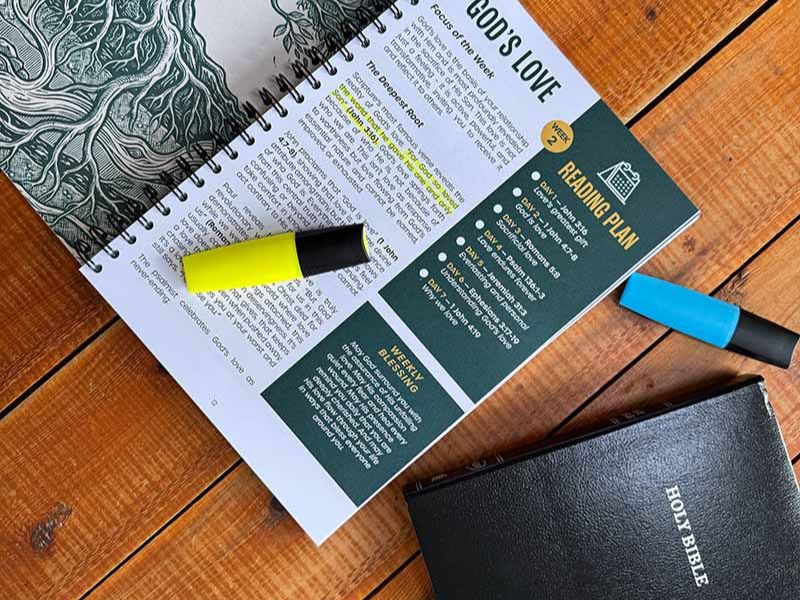
Keep your supplies together. Bible, journal, pen. I keep mine in a basket on the kitchen counter so I don’t waste five minutes looking for a pen and then give up.
Don’t pressure yourself to be deep. Some days my observations are profound. Other days they’re literally “Paul seems frustrated in this letter and honestly same.” Both are fine.
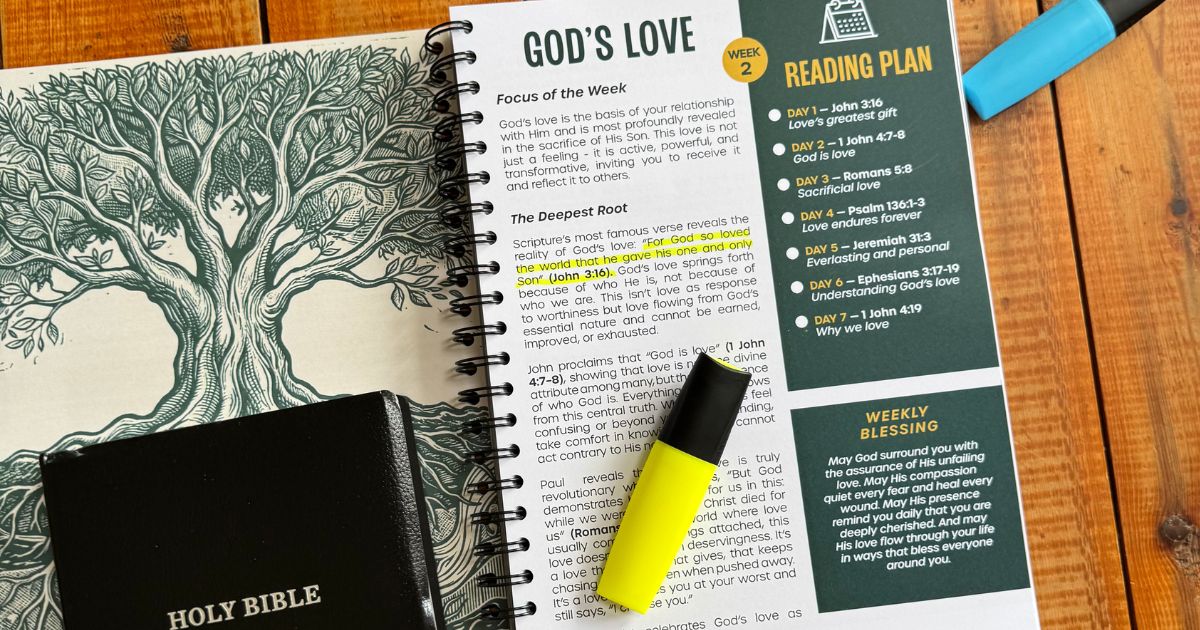
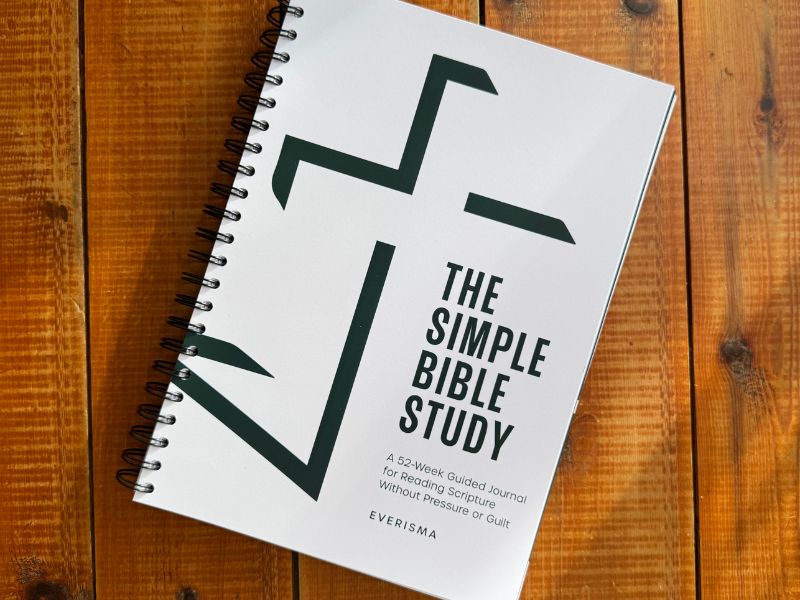
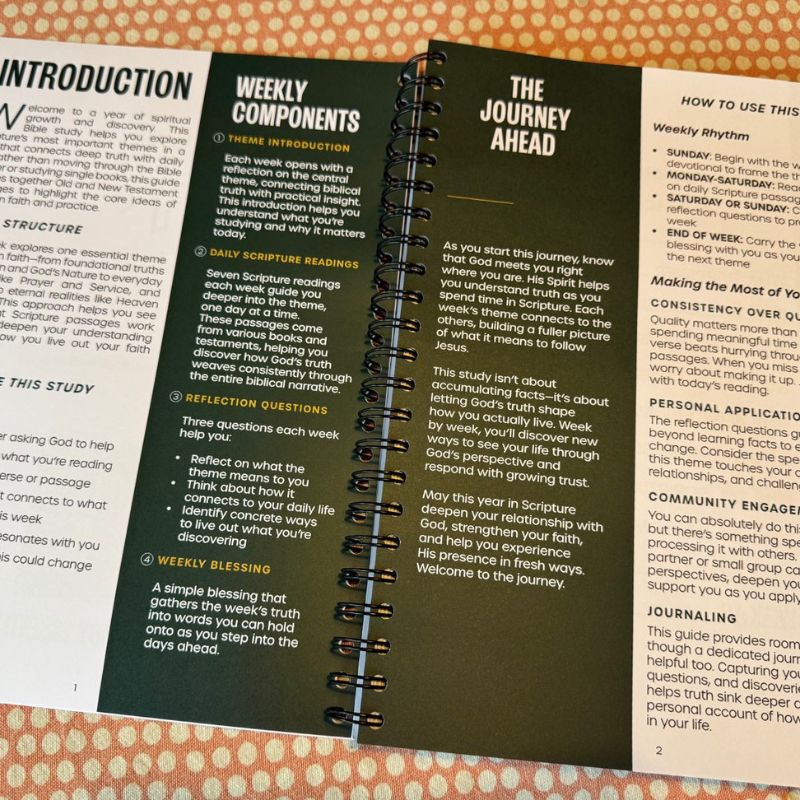
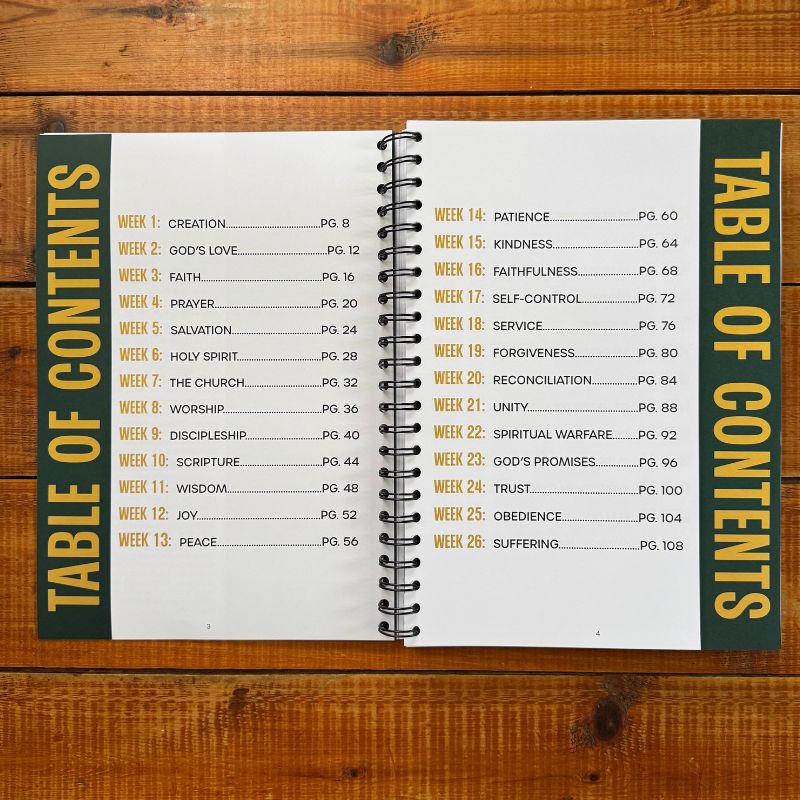
Use a reading plan. Picking what to read each day can be the hardest part. The guide I use lays out passages for each day so I just open it and go. Removes the decision fatigue entirely, and as a mom, I have zero decision-making energy left by the time I sit down.
Give yourself grace. You will miss days. You will have entries that are two sentences. You will sometimes write your prayer as “God, I’m tired. Help. Amen.” And that’s okay. It still counts. It still matters.
Who Is the SOAP Method Best For?
SOAP is perfect for:
- Complete beginners who don’t know where to start
- Busy people who have 10-15 minutes, not an hour
- People who like writing and want a journal to look back on
- Anyone who’s tried other methods and felt overwhelmed
It’s maybe not the best fit if you’re looking for really deep exegetical study (try inductive study for that) or if you absolutely hate writing. But for most people? SOAP is a great place to start and a great place to stay.
Frequently Asked Questions
Can I do SOAP Bible study digitally instead of on paper?
Sure! Some people use apps or type their SOAP entries. I personally prefer paper because it forces me to slow down and my phone is a distraction minefield. But digital works just fine ... the method is the same regardless of the medium.
How do I choose which passage to SOAP each day?
This is honestly the biggest challenge. You can follow a reading plan, work through a book of the Bible chapter by chapter, or use a guided study that picks passages for you. I'd avoid randomly flipping to a page ... it works occasionally, but you'll get more out of a structured approach.
What if my observations feel too obvious?
Obvious observations are still observations. "Jesus healed someone" is a valid observation. Over time, your observations will naturally get more detailed as you train your eye to notice patterns, repeated words, and structural elements. Don't judge your early entries ... just keep going.
How is SOAP different from regular journaling about the Bible?
Regular journaling is freeform ... you write whatever comes to mind. SOAP gives you a specific structure that ensures you actually engage with the text before jumping to personal reflection. The observation step is key ... it makes you look at what the passage actually says before you decide what it means to you, which prevents you from projecting your own ideas onto Scripture.
Ready to Find a Bible Study That Actually Works?
This is the guide that finally helped me stay consistent, and I think it can help you too.
See the Bible Study Guide I Use →Hi, I'm Kristen!
I'm a coffee-loving mom of two from who finally found a Bible study system that actually sticks. After trying (and abandoning) more study guides than I can count, I built Bible Momma to help other moms stop feeling guilty and start growing closer to God... messy schedules, short attention spans, and all.
Read my full story →