5 Bible Study Methods That Actually Work (Tested by a Real Mom)
Not sure how to study the Bible? Here are 5 proven Bible study methods with honest pros and cons from a mom who's tried them all between school pickups and cold coffee.
Written by Kristen
Coffee-loving mom of 2 · Bible study enthusiast · Founder of Bible Momma
The Best Bible Study Methods (That You’ll Actually Stick With)
Can I be honest? I spent years thinking there was one “right” way to study the Bible. Like some formula that all the put-together church ladies knew, and I somehow missed the memo.
There’s no memo. There’s no single right way. There are methods. Some click with how your brain works, and some don’t. Finding the right one is less about being spiritual and more about being realistic about your real life.
I’ve tested five of the most popular Bible study methods over the past few years. Some during nap time. Some in the carpool line. One attempt happened at 5 AM before my kids woke up… that lasted exactly three days before I chose sleep. Here’s my honest breakdown of each one.
1. The SOAP Method
SOAP stands for Scripture, Observation, Application, Prayer. You pick a verse or short passage, write it out, observe what’s happening, think about how it applies to your life, and then pray about it.
Pros:
- Dead simple. You can learn it in five minutes.
- Works great for beginners who don’t know where to start.
- The journaling part makes it feel personal and real.
- Takes 10-15 minutes, which is realistic for actual human beings.
Cons:
- Can feel surface-level if you’re studying a harder passage.
- You might miss the bigger picture of a book or chapter.
- If you’re not a journaler, the writing part might feel forced.
My take: This is where I started, and I still come back to it on weeks when life is chaos. Not fancy, but it works and you can do it anywhere. I have a whole walkthrough of the SOAP method if you want to try it.
2. Inductive Bible Study
Inductive study follows three steps: Observation (what does it say?), Interpretation (what does it mean?), and Application (what do I do with it?). It’s all about letting the text speak for itself rather than reading someone else’s take.
Pros:
- Goes deeper than most methods, so you really understand what you’re reading.
- Trains you to think carefully about Scripture.
- You start noticing patterns and connections you’d never catch otherwise.
- Feels so rewarding once you get the hang of it.
Cons:
- Steeper learning curve than SOAP.
- Takes more time. Plan on 20-30 minutes minimum.
- Can feel overwhelming if you’re new to studying on your own (I had to google “hermeneutics,” no shame).
My take: This is the method that made me feel like I finally understood the Bible instead of reading words on a page. It takes more effort, but the payoff is huge. I wrote a beginner-friendly guide to the inductive method that breaks the jargon down.
3. Verse Mapping
Verse mapping is where you take a single verse and break it apart like a detective. You look at the original Greek or Hebrew words, cross-reference other translations, check the historical background, and map out all the connections.
Pros:
- Deeply rich understanding of a single verse.
- You learn things that truly change how you see a passage.
- Great for visual learners who like diagrams and charts.
- Makes you feel like a Bible scholar (in a good way).
Cons:
- Time-heavy. One verse can take 30-45 minutes.
- Not practical for daily study unless you have a lot of free time (ha).
- Can feel overwhelming without a guide to follow.
- You cover very little ground per session.
My take: I love verse mapping for those rare mornings when both kids sleep past 7 AM and my coffee is actually hot. It’s not my everyday method, but when I do it, I always walk away with something that sticks. It’s the fancy dinner of Bible study. Wonderful, but you can’t do it every night.
4. Topical Bible Study
Instead of going book by book, topical study picks a subject (like anxiety, forgiveness, parenting, or patience) and explores what the entire Bible says about it. You gather verses from all over Scripture and study them together.
Pros:
- Directly relevant to whatever you’re dealing with right now.
- Helps you see how themes weave through the whole Bible.
- Feels practical and useful from day one.
- You can tailor it to exactly what you need in this season of life.
Cons:
- Risk of cherry-picking verses out of context (we’ve all seen that happen).
- Requires knowing where to find relevant passages, or having a good guide.
- You might miss important nuance by pulling verses from different books.
- Can feel scattered if you’re not organized.
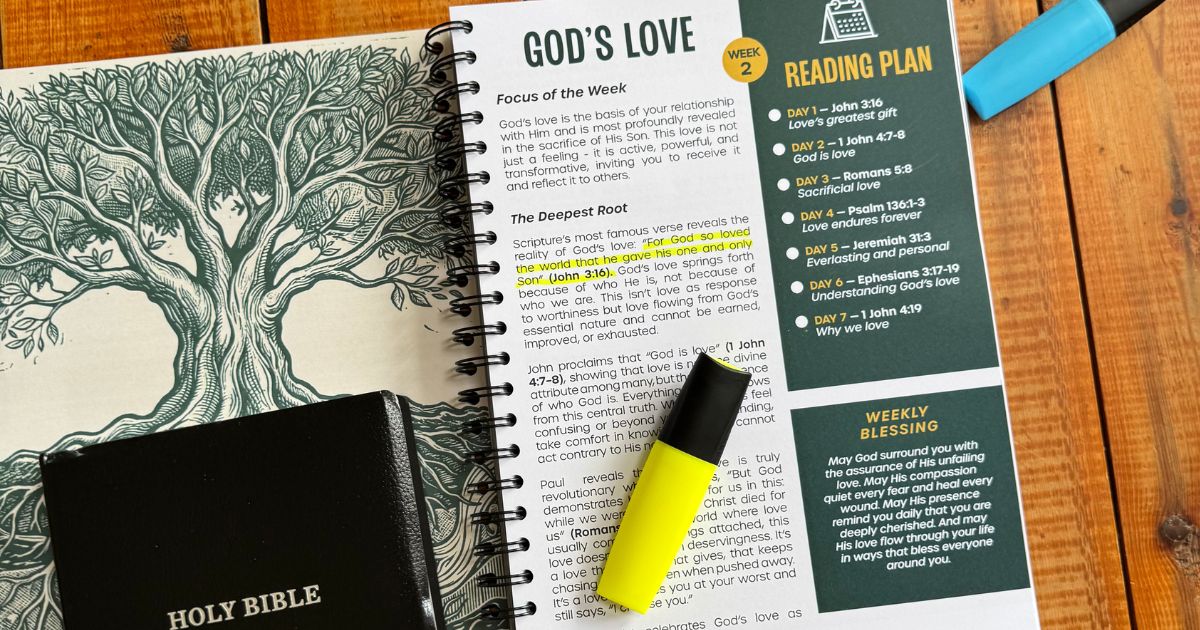
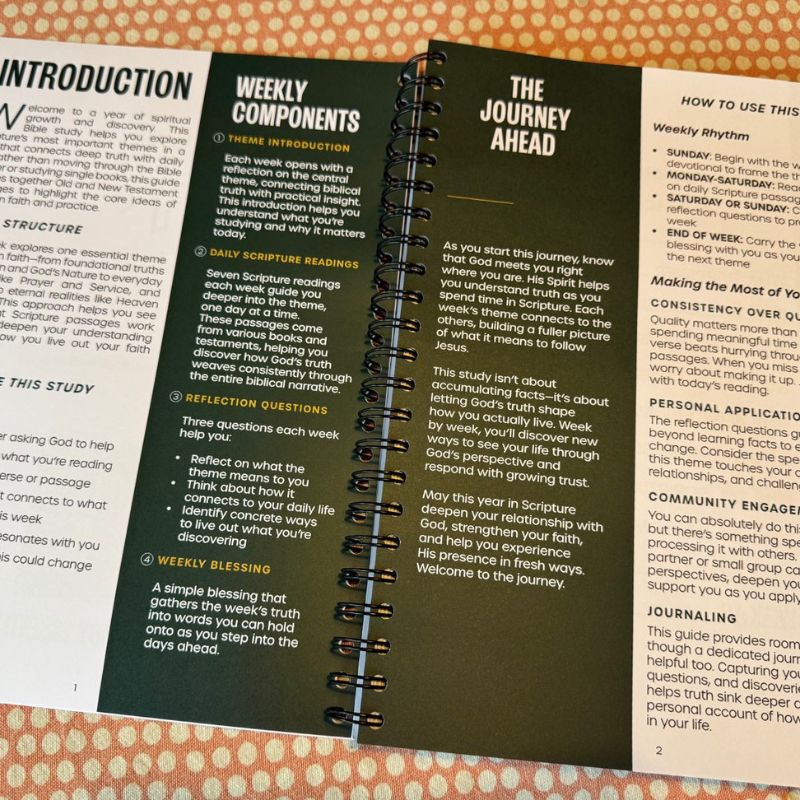
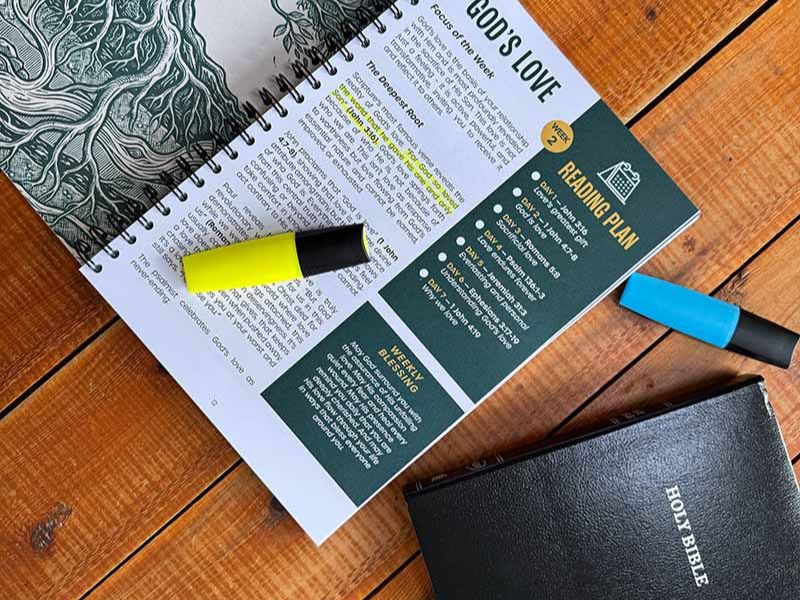
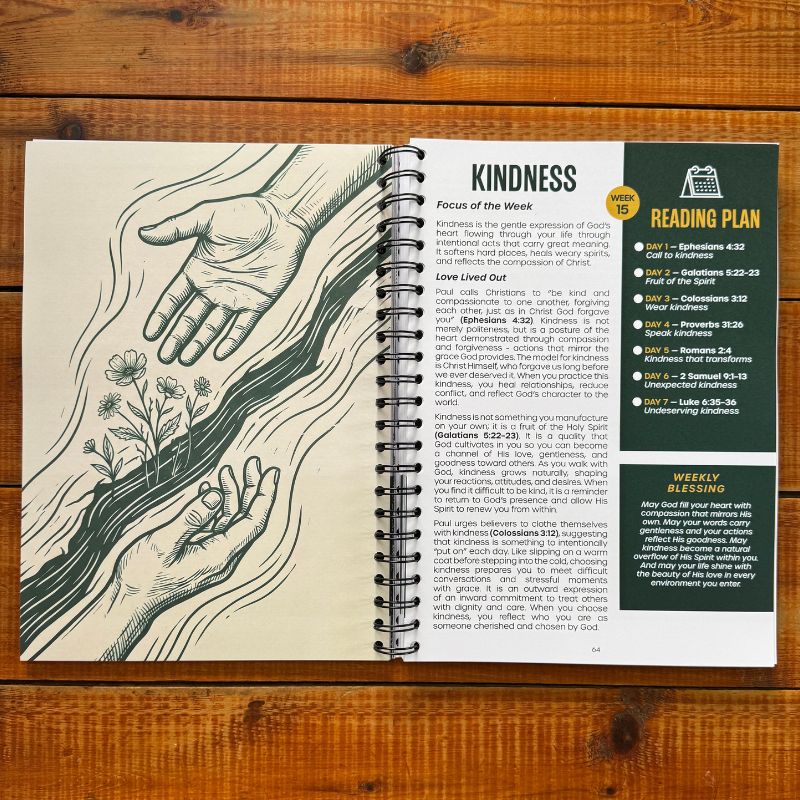
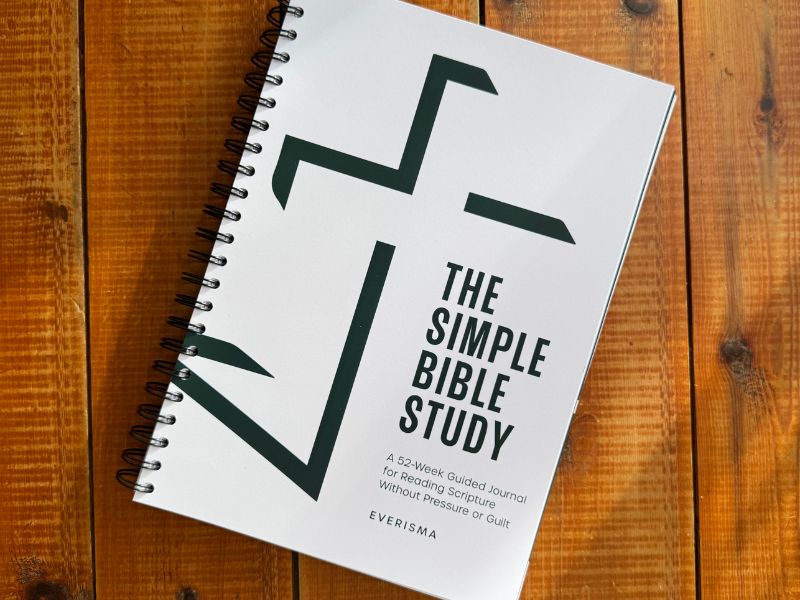
My take: When my anxiety was through the roof last fall, topical study on God’s peace was exactly what I needed. It met me where I was. Be careful to read surrounding verses so you’re not pulling things out of context. A guided study helps with this a lot. The Simple Bible Study organizes 52 weekly themes for you, from Creation to Praise, so you’re not randomly searching “Bible verses about stress” at 11 PM. It works with any Bible translation, and since it’s undated, there’s no falling behind. No guilt.
5. Devotional Reading
Devotional reading is the most casual approach. You read a short passage (or follow a devotional book or app), reflect on it briefly, and pray. No deep analysis, no word studies. Spending quiet time in the Word.
Pros:
- The lowest barrier to entry. Anyone can do this.
- Takes as little as 5-10 minutes.
- Feels peaceful rather than academic.
- Great for seasons when you’re exhausted (newborn phase, anyone?).
Cons:
- Doesn’t build deep biblical knowledge on its own.
- Easy to stay in “surface mode” forever.
- Can feel passive, like you’re going through the motions.
- Relies heavily on whatever devotional you choose.
My take: Devotional reading is where I go when I’m running on four hours of sleep and need to feel connected to God for five minutes before the day takes off. It’s not deep study, but it’s better than nothing. And some seasons, “better than nothing” is genuinely the win. If you’re wondering how devotionals compare to study guides, I break that down too.
So Which Bible Study Method Is Best?
Here’s where I’m supposed to pick a winner, right? I can’t. Because the best Bible study method is the one you’ll actually do.
If you have 10 minutes during nap time? SOAP. If you’re craving depth and have a quiet Saturday morning? Inductive. If one verse has been stuck in your head all week? Verse mapping. If you’re walking through something specific? Topical. If you’re barely surviving? Devotional reading with your coffee.
The real issue most of us face isn’t picking the “wrong” method. It’s Scripture Overwhelm. You open your Bible, don’t know where to start, feel behind, and close it again. That cycle is what keeps us stuck.
Having a simple, guided plan changes everything. I wasted so much time trying to figure out the logistics (what passage to read, what questions to ask, what to look for) when a good guide does all of that for you. That’s what finally made my quiet time consistent.
How to Pick Your Method (Without Overthinking It)
Here’s my no-overthinking framework:
- How much time do you realistically have? Not how much you wish you had. How much you actually have. Be honest.
- Are you a reader or a writer? If you love journaling, SOAP and verse mapping are your friends. If you’d rather read and reflect, devotional or inductive might fit better.
- Are you a beginner or have you been at this a while? Beginners do great with SOAP or devotional. If you’ve been studying for a while and feel stuck, inductive or topical will stretch you.
- What season of life are you in? Newborn mom? Devotional. Kids in school? Try inductive. Empty nester with time? Verse map everything.
Don’t try to do all five. Pick one. Try it for two weeks. If it doesn’t click, try another. There’s no failure here… it’s all part of learning how you grow closer to God.
And if you want a simple, guided way to study at your own pace, without the overwhelm, The Simple Bible Study is trusted by 14,000+ believers with a 95% completion rate. It’s the thing that finally helped me build a consistent quiet time. The kind of time in the Word you can pass down to your kids someday.
Frequently Asked Questions
Can I combine Bible study methods?
Absolutely. I regularly combine SOAP with topical study. I'll pick a topic, find a passage, and SOAP my way through it. The methods aren't rigid rules. They're frameworks. Mix and match whatever helps you connect with what you're reading.
How long should a Bible study session take?
Anywhere from 10 minutes to an hour, depending on the method and your schedule. SOAP and devotional reading can be done in 10-15 minutes. Inductive study and verse mapping typically take 20-45 minutes. The important thing is consistency, not duration. Fifteen minutes every day beats two hours once a month.
Do I need special supplies for Bible study?
A Bible and something to write with. That's it. Some methods benefit from colored pens, a journal, or index cards, but none of that is required. Don't let the lack of a Pinterest-worthy setup stop you from starting. My best study sessions have happened with a ballpoint pen and a napkin.
What if I try a method and it doesn't work for me?
Then you try another one. Seriously, that's it. There's no spiritual failure in discovering that verse mapping isn't your thing or that you don't love journaling. The whole point is finding what helps *you* connect with Scripture. Give each method at least a week or two before you decide, but don't force something that feels like a chore.
Ready to Find a Bible Study That Actually Works?
This is the guide that finally helped me stay consistent, and I think it can help you too.
See the Bible Study Guide I Use →Hi, I'm Kristen!
I'm a coffee-loving mom of two from who finally found a Bible study system that actually sticks. After trying (and abandoning) more study guides than I can count, I built Bible Momma to help other moms stop feeling guilty and start growing closer to God... messy schedules, short attention spans, and all.
Read my full story →