The Easiest Book of the Bible to Study First (and Why It's Not Genesis)
The easiest book of the Bible to study first is the Gospel of John. It is clear, it tells the story of Jesus, and it was written to help people believe. Mark, Psalms, and Proverbs are also good first picks. The right one is the one you will keep reading.
Which Book of the Bible Should You Start With?
Start with John if you want one answer. Pick another if your season calls for it. The best starting point depends on what you need right now.
If you want a story about Jesus, choose John or Mark. If you want comfort, choose Psalms. If you want short practical advice, choose Proverbs.
Why Genesis Is a Hard Place to Start
Genesis is the first book, so it seems like the obvious pick. It has great stories: creation, Noah, Abraham, and Joseph.
But then come the long family lists. Exodus follows, and later chapters give detailed building plans for the tabernacle, with measurements in cubits.
Many people start at Genesis with great energy and stop somewhere around Leviticus. Those books matter. They are just not the easiest place to build a habit.
The Best Books of the Bible for Beginners
These four books are good places to start. Each one fits a different kind of reader.
1. The Gospel of John: The Best Overall Starting Point
John was written to help people believe. John 20:31 says, "but these are written, that you may believe that Jesus is the Christ, the Son of God" (WEB).
It starts with the big picture of who Jesus is. The language is plain. It also includes many of Jesus's conversations, so you hear his tone and patience.
It has 21 chapters. One chapter a day finishes it in three weeks. That is a clear, small goal.
Time commitment: About 10 to 15 minutes per chapter.
2. The Gospel of Mark: For the Short Version
Mark is the shortest Gospel, with sixteen chapters. If John feels like too much, start here.
Mark moves fast. It uses words like "immediately" a lot, and it has very little filler. It reads like someone telling the most important story they know.
It is a good fit for tired seasons, when your brain can only handle something quick.
Time commitment: About 5 to 10 minutes per chapter. You could read the whole book in a weekend.
3. Psalms: For When You Need to Feel Before You Study
Psalms is poetry. It has 150 songs and prayers that cover joy, grief, anger, fear, praise, and doubt.
It meets you in a hard season. There is comfort in reading words written thousands of years ago and thinking, "Someone else felt this too."
You don't have to read it in order. Good ones to try first:
- Psalm 23, "The LORD is my shepherd" (KJV)
- Psalm 46, "Be still, and know that I am God" (KJV)
- Psalm 139, about how well God knows you
- Psalm 27, for when you need courage
- Psalm 34, for gratitude and praise
Time commitment: Most psalms take 2 to 5 minutes.
4. Proverbs: For Practical Advice
Proverbs is a book of short wisdom sayings about relationships, money, work, patience, and more. Each verse can stand alone.
It has 31 chapters, so some people read the chapter that matches the day of the month. You never have to find your place.
It is not a story. It reads more like a reference book. Some people love that. Others need a plot to stay interested.
Time commitment: 5 to 10 minutes per chapter.
How to Study a Book, Not Just Read It
Reading is good. Studying means you stop and think about what you read. Here is a simple method.
- Read the passage once to get the gist.
- Read it again, slowly. Notice what stands out.
- Ask three questions:
- What is this passage about?
- What does it tell me about God?
- How does it apply to my life today?
- Write one sentence. Something you learned, something that confused you, or something that hit home.
That takes about 15 minutes. You can do it at the kitchen table, at nap time, or after bedtime.
My Honest Recommendation
If you are new and want someone to just say what to do, start with John. Read one chapter a day for about fifteen minutes.
If John doesn't click, try Mark. If you want emotion, open Psalms. If you want practical wisdom, open Proverbs.
You don't need to read in the "right" order or cover every book. You have plenty of time for that.
You can pick one book today. You don't have to finish it. You only have to start.
Frequently Asked Questions
Should I read the Old Testament or New Testament first?
Start with the New Testament, ideally John or Mark. The Old Testament is rich, but it is harder to follow without context. Once you have a base in the New Testament, the Old Testament often makes more sense.
How long should I spend studying each day as a beginner?
Start with 10 to 15 minutes. You can always add time later. A big starting goal is a fast way to burn out. Ten focused minutes every day for a month is better than one long hour you never repeat.
Is it okay to skip around in the Bible?
Yes. The Bible is more like a library than a novel. It has 66 books by many authors over a long time. You don't have to read it in order. Start where it makes sense for you and branch out.
What if I pick a book and don't like it?
Switch. If Mark isn't connecting, try Psalms. If Psalms feels too poetic, try Proverbs. The goal is to find your way in, not to push through something that feels like homework.
A Bible Study You Can't Fall Behind In
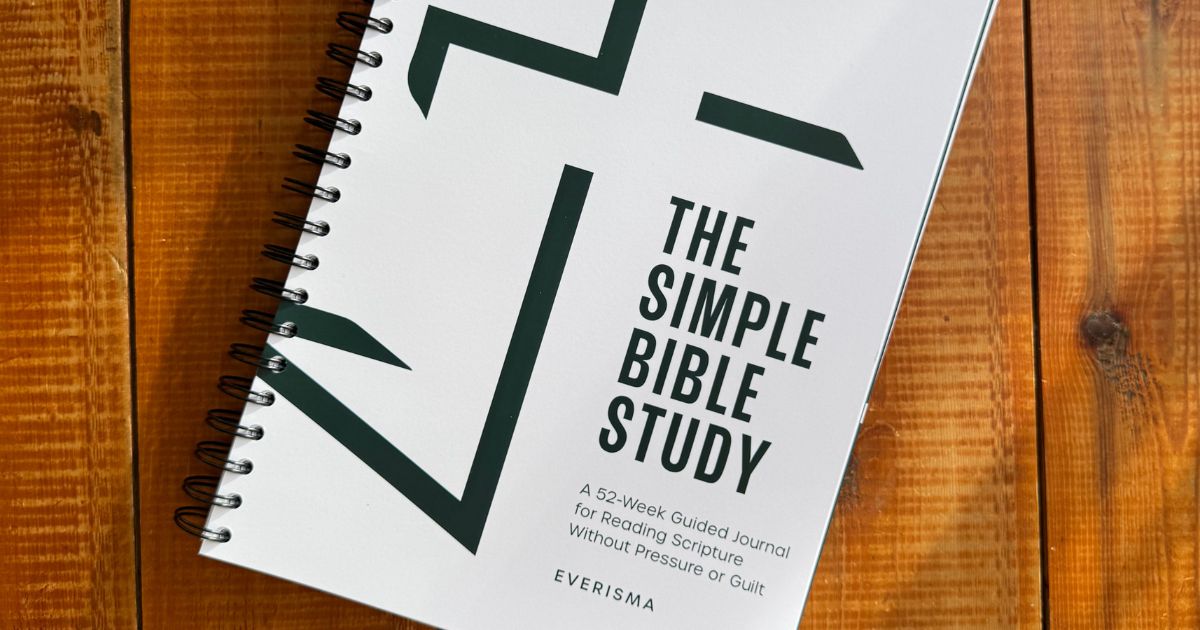
The Simple Bible Study is the guide I use. It is also our own product, made by Everisma. It has 52 weekly themes and no dates.
See The Simple Bible Study
Hi, I'm Kristen
I'm a coffee-loving mom of two. I quit more Bible studies than I finished. Then a 15-minute routine stuck. I write Bible Momma so you can stop feeling guilty and start again. Bible Momma is made by the team behind Everisma, and The Simple Bible Study is the guide I use.
More about me